10 Basic Steps to Homestead Garden Plans
The smell of composted manure warming under March sun signals the beginning of planting season. Within the first three months of establishing a homestead garden, most failures trace back to missing one of the critical steps to homestead garden plans: soil testing before amendment, ignoring frost dates, or planting incompatible companion species. A methodical approach transforms rocky pasture or compacted yard into productive ground. These steps to homestead garden plans build on each other, from initial site analysis through the first harvest, ensuring that energy invested in soil preparation compounds over multiple seasons.
Materials
Soil amendments require matching pH and nutrient profiles to intended crops. For most vegetable gardens, target a pH between 6.0 and 7.0, verified with a calibrated meter or professional lab analysis. Organic balanced fertilizer at 4-4-4 or 5-5-5 NPK ratios provides slow-release nutrition for establishment. Blood meal (12-0-0) addresses nitrogen deficiency in legume-free rotations. Bone meal (3-15-0) supports root crops and alliums. Greensand or kelp meal supplies trace minerals and potassium without the salt load of potash.
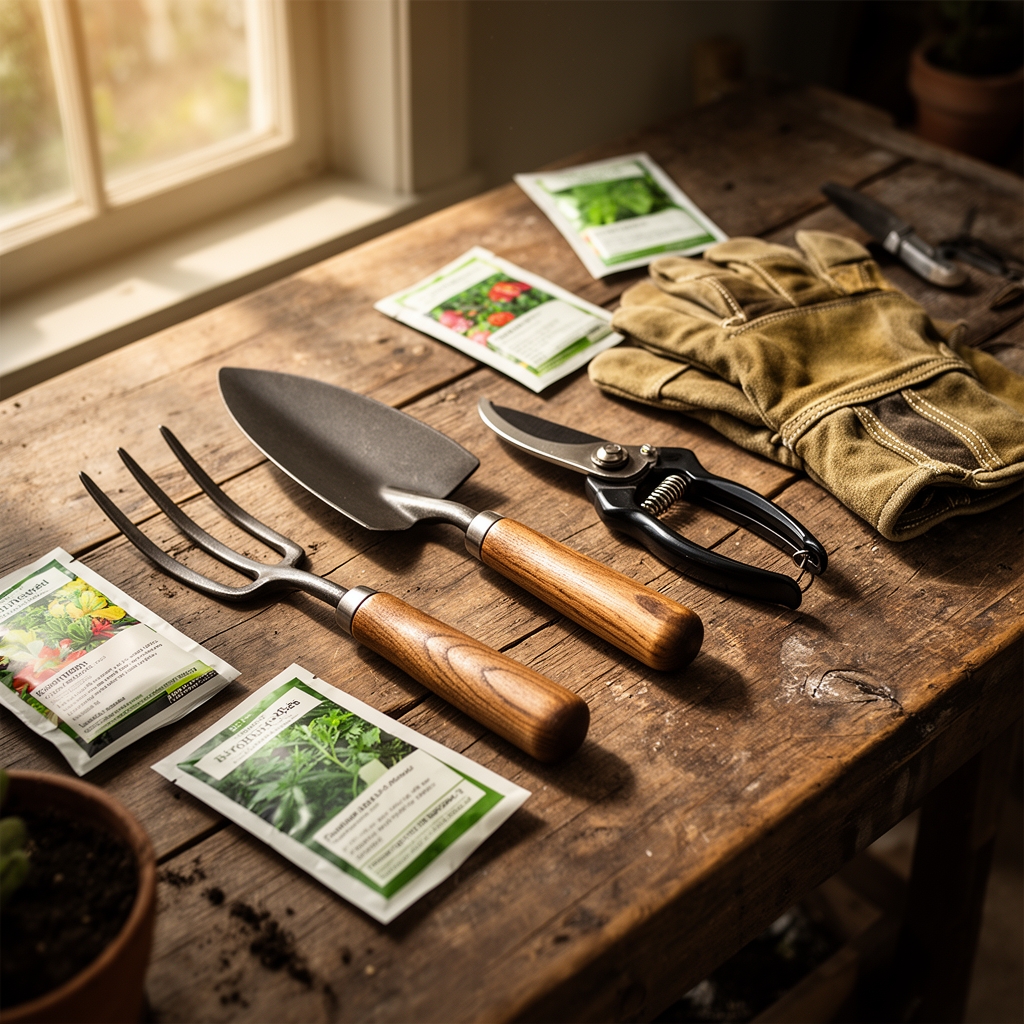
Bulk materials include two cubic yards of finished compost per 100 square feet of new bed. Mycorrhizal inoculant at 0.2 ounces per transplant accelerates phosphorus uptake in tomatoes, peppers, and squash. Untreated straw mulch at three inches depth suppresses annual weeds and moderates soil temperature. Garden fabric in 30-inch width covers paths, reducing compaction and mud transfer.
Timing
Hardiness zones determine frost-free windows. Zone 5 gardeners work soil after April 25; Zone 7 after March 20; Zone 9 maintains year-round planting with brief pauses during extreme heat. Last frost dates shift planting schedules for warm-season crops. Tomatoes, peppers, cucurbits, and beans require soil temperature above 60 degrees Fahrenheit at four-inch depth. Cold-season brassicas, alliums, and root vegetables tolerate soil as cool as 40 degrees.
Perennial establishment happens in fall, six weeks before ground freeze. Asparagus crowns, rhubarb divisions, and berry canes root aggressively in September through October when soil warmth persists but air temperature drops. Spring planting of perennials delays fruiting by one full year.
Phases

Sowing begins indoors under full-spectrum LED at 6,500 Kelvin, eight weeks before last frost for tomatoes and peppers, six weeks for brassicas. Seed-starting mix remains sterile; garden soil introduces damping-off pathogens. Bottom heat at 75 degrees accelerates germination. Direct-sow carrots, parsnips, and salad greens after soil reaches workable moisture, when a squeezed handful crumbles rather than forming a mud ball.
Pro-Tip: Coat legume seeds with Rhizobium inoculant powder before planting. This symbiotic bacteria colonizes root nodules and fixes atmospheric nitrogen at rates up to 200 pounds per acre annually.
Transplanting occurs on overcast afternoons to reduce transplant shock. Harden off seedlings over seven days, increasing outdoor exposure by two hours daily. Dig holes twice the root ball width. Position transplants at the same depth as the nursery container, except tomatoes, which root along buried stems. Water with dilute fish emulsion at 1 tablespoon per gallon, applying one cup per plant.
Pro-Tip: Prune tomato suckers at 45-degree angles using sterilized shears. This promotes auxin distribution to fruit-bearing branches and improves airflow.
Establishing extends through the first 30 days post-transplant. Monitor for wilting at midday; consistent wilting indicates root-zone dryness despite surface moisture. Side-dress with compost at 14 and 28 days, pulling mulch back to expose soil, then replacing after application. Stake indeterminate tomatoes at 18 inches height before vines sprawl.
Pro-Tip: Apply foliar kelp spray at 1 tablespoon per gallon every 10 days. Trace minerals absorb through stomata, enhancing stress tolerance during establishment.
Troubleshooting
Symptom: Yellowing lower leaves with green veins indicate iron chlorosis.
Solution: Reduce irrigation frequency. Over-watering in alkaline soils locks iron into unavailable forms. Chelated iron at 1 tablespoon per gallon provides quick correction. Sulfur amendments lower pH over three months.
Symptom: Blossom end rot appears as sunken black lesions on tomato and pepper fruits.
Solution: Calcium deficiency caused by inconsistent watering. Apply gypsum at 2 pounds per 100 square feet. Maintain even soil moisture at one inch per week.
Symptom: Flea beetles create shot-hole damage on brassica leaves.
Solution: Row covers prevent adult beetles from accessing plants. Diatomaceous earth dusted on foliage at dawn, when dew provides adhesion, damages beetle exoskeletons.
Symptom: Powdery mildew forms white patches on cucurbit leaves.
Solution: Baking soda spray at 1 tablespoon per gallon with three drops dish soap changes leaf surface pH. Apply weekly. Improve airflow by pruning overlapping branches.
Maintenance
Water delivers one inch per week, measured with rain gauges placed at bed level. Drip irrigation at 0.5 gallons per hour per emitter reduces foliar disease. Mulch replenishment maintains three-inch depth as material decomposes. Cation exchange capacity improves when organic matter percentage reaches 5 percent, typically after three years of annual compost additions at one inch depth.
Rotate crop families annually. Solanaceae follow legumes to capitalize on residual nitrogen. Brassicas precede alliums to break pest cycles. Record planting dates, varieties, and yields in a bound notebook to identify high-performing genetics.
FAQ
How large should a beginner homestead garden be?
Start with 200 square feet, roughly 10 by 20 feet. This size produces meaningful harvests without overwhelming maintenance demands.
When do I test soil?
Test every three years or when plants show unexplained deficiency symptoms. Fall testing allows time to adjust pH before spring.
Can I use wood chips as mulch in vegetable beds?
Aged wood chips work in pathways. Fresh chips tie up nitrogen during decomposition. Use straw or compost on growing beds.
What spacing do tomatoes need?
Indeterminate varieties require 24 inches between plants in rows 36 inches apart. Determinates tolerate 18-inch spacing.
How do I prevent deer damage?
Eight-foot woven wire fencing excludes deer reliably. Angled electric wire at 48 inches height provides a lower-cost alternative.