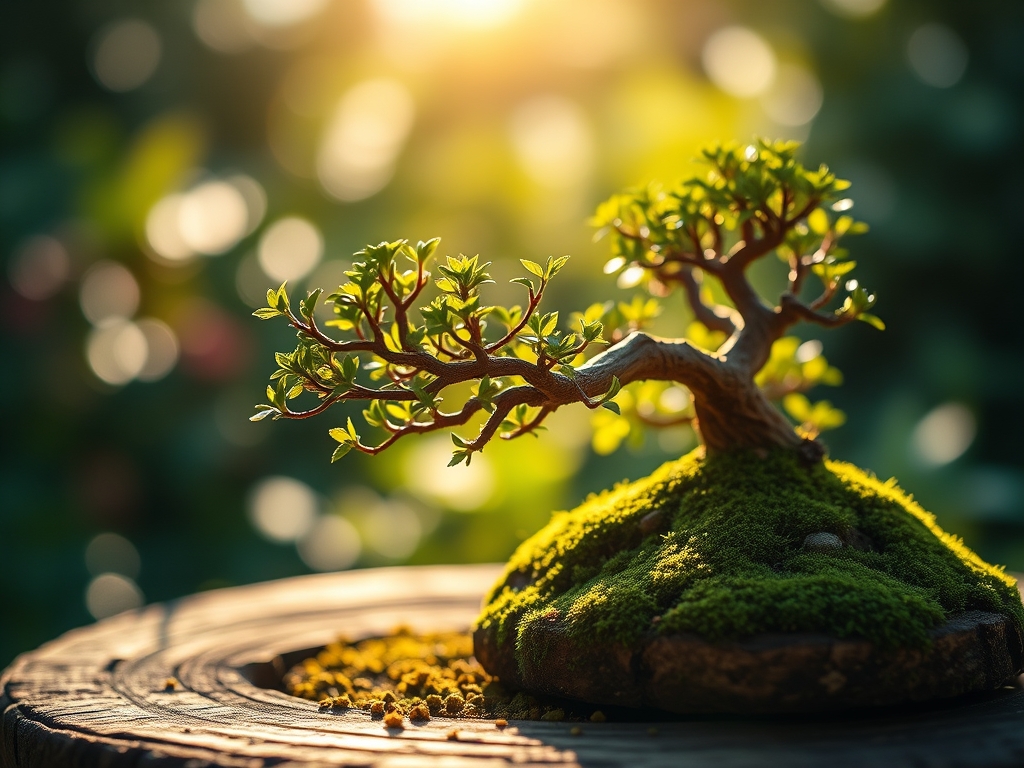
7 Best Indoor Bonsai Kits for Beginners
Growing miniature trees indoors transforms any room into a controlled experiment in patience and precision. The best indoor bonsai kits provide everything needed to cultivate species like Ficus retusa, Juniperus procumbens, or Carmona microphylla without sourcing individual components. These kits eliminate guesswork for beginners by bundling pre-bonsai stock, training wire, substrate blends, and ceramic containers. Each species responds differently to indoor light spectrums, humidity gradients, and root pruning schedules.
Materials
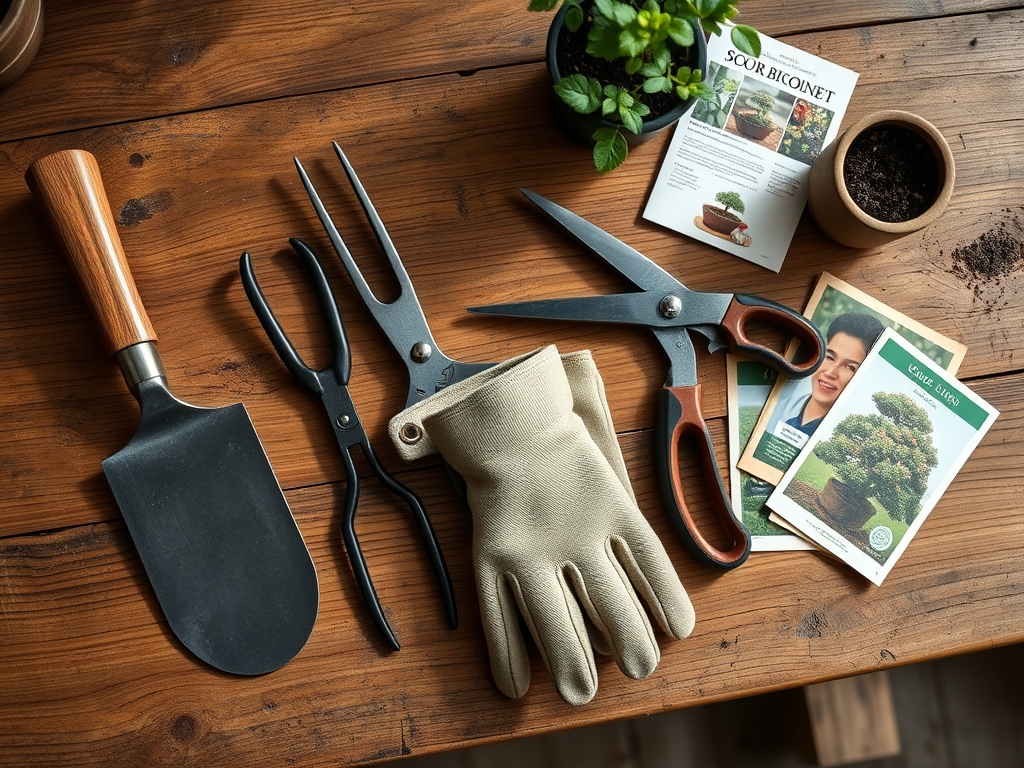
The best indoor bonsai kits include substrate mixtures engineered for rapid drainage and oxygen penetration. Akadama clay, a volcanic product from Japan, holds a cation exchange capacity of 20-30 meq/100g and maintains structural integrity through 18-24 months of freeze-thaw cycles. Pumice and lava rock provide permanent porosity at 50-70% air space. Organic components like composted pine bark contribute trace elements but decompose within two growing seasons. Premium kits supply pH-neutral substrates ranging from 6.5 to 7.0, ideal for tropical species.
Fertilizer protocols vary by growth phase. Balanced formulations at 4-4-4 (nitrogen-phosphorus-potassium) suit establishment periods. During active growth from March through September, shift to 6-4-4 ratios to promote internode elongation and leaf expansion. Autumn applications benefit from 3-10-10 blends that redirect auxin distribution toward root development and lignification. Liquid kelp extracts at 0.1-0.2-0.1 provide micronutrients including boron, manganese, and zinc without salt accumulation.
Copper or aluminum wire gauges from 1.0mm to 3.0mm allow branch repositioning without girdling cambium tissue. Ceramic glazed pots in earth tones reduce substrate temperature fluctuations by 4-6 degrees Fahrenheit compared to unglazed terracotta. Drainage holes must measure at least 8mm diameter to prevent substrate compaction and anaerobic conditions.
Timing
Indoor cultivation bypasses traditional hardiness zones, but respecting dormancy requirements remains critical for temperate species. Junipers and maples require 800-1,200 chilling hours below 45 degrees Fahrenheit to complete their vernalization cycle. Position these species in unheated garages or cold frames from November through February. Tropical varieties like Ficus and Schefflera thrive at constant temperatures between 65-80 degrees Fahrenheit year-round.
Begin training protocols in early spring when cambium cells reactivate and vascular tissue remains pliable. Avoid heavy pruning between October and February when carbohydrate reserves concentrate in root systems. Repotting windows open during the two-week period following bud swell but before full leaf expansion. This narrow timeframe minimizes transplant shock and maximizes root regeneration.
Phases

Sowing: Stratify temperate seeds at 38-41 degrees Fahrenheit for 60-90 days in moistened sphagnum moss. Scarify hard-coated species like Wisteria with 180-grit sandpaper to increase germination rates from 30% to 75%. Sow at depths equal to twice the seed diameter. Maintain substrate moisture at field capacity without waterlogging.
Pro-Tip: Inoculate substrate with Glomus intraradices mycorrhizal spores at 5 grams per liter to colonize 40-60% of root length within eight weeks. This symbiosis increases phosphorus uptake efficiency by 300%.
Transplanting: Remove seedlings when the taproot reaches 3-4 inches. Prune the taproot to 1.5 inches using sterile concave cutters at a 45-degree angle. This injury stimulates lateral root proliferation and establishes the nebari foundation. Position the rootball 0.5 inches above the container rim to account for substrate settling.
Pro-Tip: Apply rooting hormone containing 0.1% indole-3-butyric acid to cut surfaces. Expect adventitious root formation within 14-21 days under 70-degree soil temperatures.
Establishing: Wire primary branches when shoots reach pencil thickness but before bark hardens. Wrap at 45-degree angles with 1.5-2.0 turns per inch of branch length. Remove wire after 6-8 weeks for tropical species, 12-16 weeks for conifers. Defoliation techniques force secondary bud break but should occur only on vigorous specimens with 8+ branches.
Pro-Tip: Position grow lights 12-18 inches above canopy providing 2,000-3,000 foot-candles for 12-14 hours daily. Blue spectrum LEDs at 400-500nm wavelengths promote compact growth and prevent etiolation.
Troubleshooting
Symptom: Yellowing leaves with green veins (interveinal chlorosis).
Solution: Iron deficiency caused by alkaline substrate. Drench with chelated iron (Fe-EDDHA) at 1 teaspoon per gallon. Retest pH; maintain below 7.0.
Symptom: Black sooty residue on leaf surfaces.
Solution: Honeydew excretion from scale insects or aphids. Spray horticultural oil at 2% concentration, ensuring coverage of leaf undersides. Repeat every 7 days for three applications.
Symptom: Wilting despite moist substrate.
Solution: Root rot from Phytophthora or Pythium fungi. Unpot immediately, remove brown mushy roots, and replant in sterile substrate. Reduce watering frequency by 30%.
Symptom: White cottony masses at branch crotches.
Solution: Mealybug infestation. Swab with 70% isopropyl alcohol using cotton applicators. Introduce Cryptolaemus montrouzieri beetles at 2-5 per plant for biological control.
Symptom: Needle browning from tips inward on conifers.
Solution: Salt accumulation from over-fertilization. Leach substrate with distilled water at three times pot volume. Resume fertilizing at half strength.
Maintenance
Water when the top 0.5 inches of substrate feels dry to touch. Apply room-temperature water until it flows freely from drainage holes, approximately 1-1.5 cups per 6-inch pot. Humidity trays filled with pea gravel and 0.25 inches of water create localized humidity zones of 50-60%. Mist foliage during morning hours to allow evaporation before nightfall.
Prune new growth to 2-4 leaves once shoots extend 6-8 leaves. Remove crossing branches that create bark abrasions or trap moisture. Concave cuts heal faster than flush cuts by generating callus tissue that rolls over wounds within one growing season. Seal cuts larger than 0.5 inches diameter with cut paste containing fungicides.
Fertilize every 14 days during active growth using liquid formulations at quarter strength. Skip feeding during winter dormancy for temperate species. Rotate pots 90 degrees weekly to ensure even light distribution and symmetrical growth patterns.
FAQ
How long before a kit produces a mature bonsai?
Achieve basic structure in 3-5 years. Traditional bonsai aesthetics require 10-15 years of progressive training and refinement.
Can I use garden soil in bonsai pots?
No. Garden soil compacts in shallow containers, reducing oxygen availability and promoting root rot. Use only granular inorganic substrates.
Which species tolerates low light best?
Ficus retusa survives at 1,000 foot-candles but grows optimally at 2,500. Chinese Elm (Ulmus parvifolia) adapts to 800-1,200 foot-candles.
How often should I repot?
Young trees annually, mature specimens every 2-3 years. Repot when roots circle the container perimeter or substrate breaks down into powder.
Do indoor bonsai need winter dormancy?
Temperate species require cold exposure. Tropical varieties grow continuously without dormancy periods.