6 Vital Steps to Plant Black Tomatoes
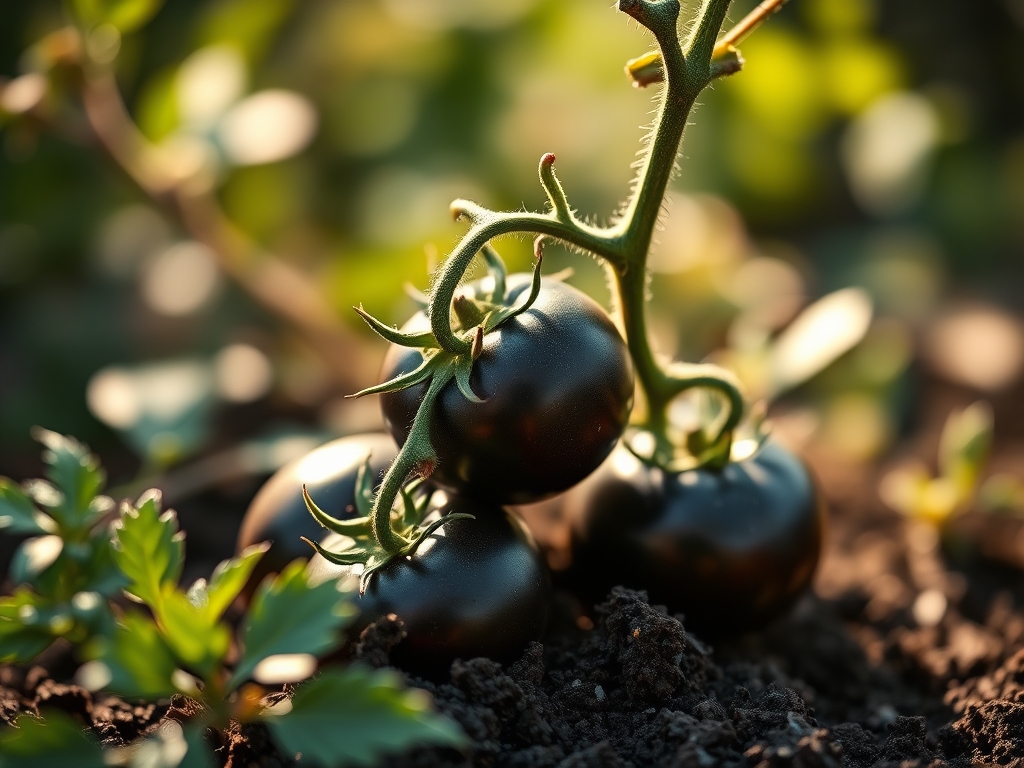
The first bite of a Solanum lycopersicum cultivar bred for anthocyanin production delivers a complexity unknown to standard red varieties. Glossy shoulders of near-black fruit emerge from the stem, their pigmentation most intense where ultraviolet light strikes the epidermis. Following six specific steps to plant black tomatoes ensures that these anthocyanin-dense cultivars develop the deep color and balanced acid-to-sugar ratio that defines premium harvests.
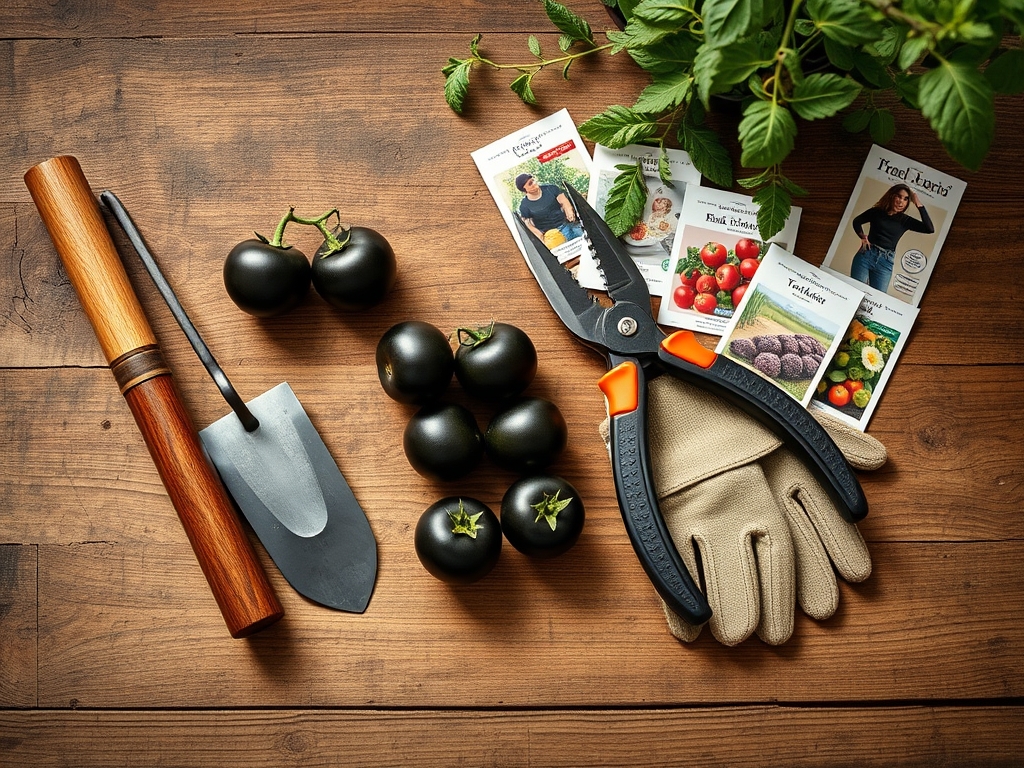
Materials
Select a sterile seed-starting mix with a pH of 6.0 to 6.8 and low electrical conductivity. For seedlings, apply a water-soluble fertilizer rated at 5-3-3 NPK at one-quarter strength weekly. Transplant containers should hold at least one gallon of substrate amended with a 4-4-4 organic meal derived from feather, bone, and kelp sources. Incorporate mycorrhizal fungi inoculant (Glomus intraradices or Rhizophagus irregularis) at 0.25 ounces per cubic foot to enhance phosphorus uptake and improve drought tolerance.
Prepare garden soil by testing cation exchange capacity. Ideal CEC values fall between 10 and 20 meq/100g, ensuring adequate nutrient retention without waterlogging. Amend clay-heavy soils with 2 inches of aged compost and coarse perlite at a 3:1 ratio. For raised beds, construct frames 12 inches deep and fill with a blend of 50% topsoil, 30% compost, and 20% coconut coir to maintain friable structure through the growing season.
Timing
In USDA Hardiness Zones 5 through 7, start seeds indoors 6 to 8 weeks before the last expected frost date. Transplant outdoors only when soil temperature at 4-inch depth consistently exceeds 60°F for three consecutive mornings. Zones 8 through 10 permit direct sowing after daytime highs stabilize above 70°F and nighttime lows remain above 55°F. Black tomato cultivars such as 'Indigo Rose' and 'Black Beauty' require a minimum 75-day maturation window from transplant to first harvest.
For fall crops in Zones 9 and 10, sow seeds in mid-July to allow fruit set before nighttime temperatures drop below 50°F. Auxin distribution diminishes in cool conditions, leading to blossom drop and reduced pollination efficiency.
Phases

Sowing
Sow seeds 0.25 inches deep in pre-moistened cells. Maintain substrate temperature between 75°F and 80°F using a seedling heat mat. Germination occurs within 5 to 10 days. Once cotyledons fully expand, reduce temperature to 65°F to 70°F and provide 14 hours of full-spectrum light at 2,000 to 3,000 foot-candles. Transplant seedlings into 4-inch pots when the first true leaf reaches 1 inch in length.
Pro-Tip: Brush seedling stems gently with your hand twice daily for 30 seconds to simulate wind stress. This mechanical stimulation triggers thigmomorphogenesis, producing stockier plants with 20% greater stem diameter.
Transplanting
Harden off seedlings over 7 days by gradually increasing outdoor exposure. Dig planting holes 12 inches deep and 18 inches wide, spacing plants 24 to 30 inches apart in rows separated by 36 inches. Strip leaves from the lower two-thirds of each stem and bury the plant up to the remaining foliage. Adventitious roots form along buried stem tissue, expanding the root zone by up to 40%.
Pro-Tip: Orient transplants so the first flower truss faces south. This positioning maximizes ultraviolet exposure on developing fruit, intensifying anthocyanin synthesis and producing darker pigmentation.
Establishing
Install stakes or cages at transplant time to avoid root disturbance later. Drive 6-foot stakes 12 inches into the soil, positioning them 3 inches from the stem. Water with 1 gallon of dilute fish emulsion (2-4-1 NPK) immediately after planting. Apply a 3-inch layer of straw mulch in a 12-inch radius around each plant, keeping mulch 2 inches away from stems to prevent collar rot.
Pro-Tip: Prune to a single leader by removing all suckers below the first flower truss within 48 hours of transplanting. This concentrates auxin distribution upward and accelerates fruit maturation by 7 to 10 days.
Troubleshooting
Symptom: Interveinal chlorosis on middle leaves with purple-tinged stems. Solution: Phosphorus deficiency. Apply rock phosphate at 2 pounds per 100 square feet or foliar-spray with 0-10-10 liquid fertilizer at label rates.
Symptom: Blossom-end rot presenting as sunken, leathery lesions on fruit bases. Solution: Calcium uptake disruption caused by inconsistent watering. Maintain consistent soil moisture and apply calcium chloride foliar spray at 1 tablespoon per gallon weekly.
Symptom: Sticky honeydew coating leaves with sooty mold growth. Solution: Aphid infestation. Release Aphidius colemani parasitoid wasps at 0.5 per square foot or spray insecticidal soap at 2% concentration every 5 days for three applications.
Symptom: Wilting despite adequate moisture, with vascular browning visible in cut stems. Solution: Verticillium wilt. Remove affected plants immediately. Solarize soil with clear plastic sheeting for 4 to 6 weeks before replanting.
Maintenance
Apply 1 inch of water per week through drip irrigation or soaker hoses, adjusting to 1.5 inches during fruit set. Fertigate every 14 days with 8-16-24 NPK soluble formula at 1 tablespoon per gallon. Prune indeterminate varieties to 4 or 5 main trusses, removing terminal growth 30 days before first expected frost. This redirects energy into ripening existing fruit rather than producing new flowers.
Remove lower leaves up to the first ripening fruit truss to improve air circulation and reduce foliar disease pressure. Monitor soil pH monthly, adjusting with elemental sulfur if readings exceed 7.0.
FAQ
How long do black tomatoes take to ripen?
Black tomatoes require 75 to 90 days from transplant to harvest. Fruit is ripe when shoulders develop deep purple-black coloration and flesh yields slightly to pressure.
Do black tomatoes need more sun than red varieties?
Yes. Anthocyanin production requires 8 to 10 hours of direct sunlight daily. Insufficient UV exposure results in dull brown coloration rather than true black pigmentation.
Can I grow black tomatoes in containers?
Determinate varieties thrive in 15-gallon fabric pots with drainage holes. Use a soilless mix and fertilize weekly with half-strength 10-10-10 NPK solution.
Why are my black tomatoes splitting?
Rapid water uptake after drought stress causes epidermal cracking. Maintain consistent moisture and harvest fruit promptly when ripe.
What causes green shoulders on black tomatoes?
Excess nitrogen promotes chlorophyll retention. Reduce fertilizer to 5-10-10 NPK during fruit development and ensure adequate potassium availability.